

Posts and Newsletters

Perspectives on impact investing and ESG-related questions
The climate transition: 5 things to know
In this issue, we highlight the challenge of reducing carbon and hitting Paris climate targets. We review how banks are making slow progress, the small number of companies responsible for most greenhouse gas emissions, the energy requirements and climate implications of AI, and the Science-Based Targets initiative’s (SBTi) controversial recent statements about carbon offsets. We also take a look at recent government policy changes that have watered down their own transition commitments. Together, these topics highlight the need for innovative and efficient financing solutions for transitioning the real economy. 1. Net zero banks don't seem to finance less carbon A recent Columbia business school study on net zero commitments made by banks made discouraging reading. 138 banks, representing over 40% of global banking assets,
Read More

What might happen to the IRA with the election?
In this edition we’ll look at the latest projections of how the Inflation Reduction Act (IRA) will impact US carbon emissions, as well as its political durability. We’ll also look at how in Europe carbon prices are falling, while the Chinese EV industry is making inroads based on their low cost advantage. Finally, the climate data isn't improving, with oceans proving the latest example of accelerating change. Future impact of the IRA – The National Bureau for Economic Research (NBER) published its most recent analysis of the IRA under several different scenarios post 2024 election. These include extremes from completely rolling it back, to complimenting it with carbon taxes/carbon price. The range of outcomes is wide, but under any scenario, the US emissions profile
Read More
Are equity holders backtracking on sustainability?
In this newsletter, we'll look at how the politicization of ESG and sustainability writ large over the last 18 months has created a stark difference between US and European approaches. This is both in support for ESG initiatives at companies, as well as the political and community support for solar and wind solutions. Despite this backsliding, the climate reality was significantly outside the bounds of normal for 2023, making the political headwinds even harder to understand. The lack of political will for support of ESG initiatives and permitting for projects is a larger barrier to mitigating climate change than capital.   Big asset managers backtracking on ESG/metrics – A recent report from Morningstar tracks the proxy voting of US and European equity managers on ESG topics.
Read More
The continued mainstreaming of impact investing
In this month’s newsletter, we look at potential progress associated with COP 28 that is wrapping up as we write, 2023’s record-breaking emissions, as well as asset owner allocation trends, and data from Pitchbook on impact fund performance.   COP review – With COP 28 winding down, we’re broadly skeptical about the outcomes of the meeting. Although it’s encouraging that the words “fossil fuel” were used for the first time in COP language, we are skeptical it will amount to much if it doesn’t specifically call for phasing out fossil fuels. And the second draft, released on Wednesday Dubai time, has no explicit commitment to “phase down” (let alone “phase out”) fossil fuels.  Four geographies matter: If the US, China, Europe and India don’t
Read More
Is there hope for a climate conference in the Middle East oil patch?
In this month’s newsletter, we look at trends in climate investing and progress ahead of COP 28 in Dubai at the end of the month. We also find a few green shoots among some depressing trends in climate change mitigation efforts that have been politicized and lost momentum in certain geographies. Is there a ‘COP’ out ahead? – The next UN climate change conference takes place at the end of November, and our expectations for significant progress are low. Oil companies and politicians have recently backtracked on their commitments, which perhaps seems fitting for a conference held in major oil-producing country (Dubai) and chaired by the head of the Abu Dhabi oil company.  Loss and damage progress ahead of schedule – One item that has made progress ahead
Read More
Which climate framework is best?
In this issue, we look at how the proliferation of climate frameworks is an opportunity for AI to harmonize analysis. Even with the best climate frameworks, there's the question of whether accounting for carbon as opposed to reporting it will drive better outcomes. We'll also look at how governance is (again) often taken for granted and ends up hindering otherwise promising organizations. Finally, we'll look at how water remains an issue (and potential investment opportunity) in different ways in different areas. One climate framework to rule them all?  - Over the past few years, the number of climate frameworks has proliferated tremendously. The list below captures most of the frameworks for context (from the report - Net Zero Transition Plans: Red Flag Indicators to Assess Inconsistencies and Greenwashing) Obvious challenges this presents
Read More
Using AI to assess climate commitments
Hello from Impact Delta.In this issue, we review: How a Canadian company is using AI to assess the credibility of climate commitments;  Why the European Central Bank is worried about damaged ecosystems; How climate change is changing European tourism; and The large jump in the northern hemisphere’s atmospheric carbon concentration this year. The credibility of climate commitments, and a powerful approach to check them - Many asset owners find that asset managers are more willing to report sustainability performance than ever before. British Columbia Investment Management Corporation (BCI) reported this, for example, in the private equity section of its most recent ESG report:   But how could an asset owner like BCI check (for example) the decarbonization plans of those portfolio companies? A Toronto-based firm, 15Rock, has developed an AI-based approach to address this
Read More
Which country shows the answer for EV adoption?
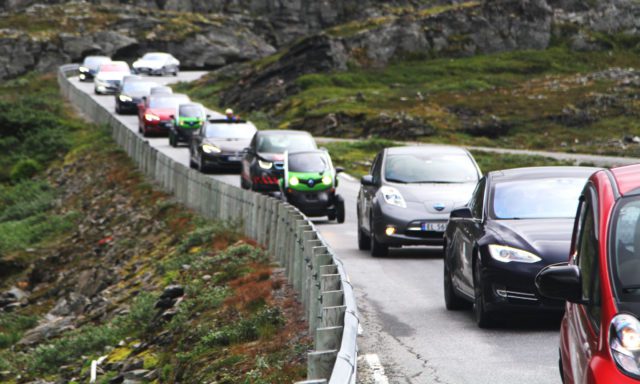
Hello from Impact Delta.In this issue, we look at how EV adoption is going in the leading country, Norway. We'll also look at how reading/education solutions require more than just curriculum for greatest impact, how the proxy season is going for carbon proposals, and how biodiversity credits are rapidly developing along the lines that carbon credits did 15 years ago.  Norway as the EV canary in the coal mine - The growth of electric vehicles is undeniable, and a trend that is only likely to continue. Skeptics have pointed to challenges with consumer range anxiety, changing driving habits, and stress on the electric grid from a dramatic increase in EV penetration. The clearest answer to concerns comes from Norway, where progressive policies
Read More
Can Growth And Lower Absolute Carbon Emissions Co-Exist?
Hello from Impact Delta. In this issue, we look at how governance is sometimes taken for granted when it's not under a microscope. We'll also look at BlackRock's recent DEI report, as well as Microsoft's 2021 environmental report, in advance of their upcoming 2022 release. Finally, we'll look at whether carbon prices have an impact on share prices of companies that have regulatory exposure to the Emissions Trading System (referred to as “ETS system”) in Europe (spoiler alert, they do).  Good governance is most prevalent in the sunlight - Most investors that focus on ESG spend most of their time enhancing 'E' and 'S' efforts, with the view that 'G' is very well in hand. Indeed, the research on the benefits of diverse boards (and
Read More
Is oil and gas really committed to decarbonizing?
Hello from Impact Delta. At the CERAWeek annual oil and gas/energy conference last week, Jigar Shah (head of the U.S. Department of Energy’s clean tech loan program) said, "I do think that today we view ourselves as one energy industry, not a clean energy industry and a dirty energy industry," which raises the question: Is oil and gas really committed to decarbonizing? Also in this newsletter, we look at the recent SVB collapse and potential collateral damage, as well as the start to the 2023 proxy voting season. CERAWeek - The annual CERAWeek conference convenes the CEOs of the largest oil companies around the world, and increasingly includes some of the leading lenders and operating companies driving the transition to clean energy. However, the
Read More
Political realities of climate change | Diversity in PE
Hello from Impact Delta. In this edition, we look at the various levels of political engagement for fighting climate change. We'll also see how the best intentions of federal policies can have negative environmental justice impacts. Finally, the business case for diversity at the partner level in PE firms is becoming more acute.  Federal vs city level climate action - Although the Inflation Reduction Act (IRA) did have significant federal support for climate initiatives, divisive federal politics continue to constrain policy options. At the recent conference of US mayors, there was significant focus on how cities could take steps to address climate change. The survey that was taken during the conference concluded that mayors would like to do far more to address climate change, however
Read More
Water: An Opportunity for Impact
Recent issues of The Wall Street Journal (September 12th’s edition ran “ESG Does Neither Much Good nor Very Well”) and The Economist (July 23rd’s cover was “ESG: Three Letters that Won’t Save the Planet”) illustrate a growing backlash against “ESG” even as scrambled supply chains suffer further interruptions from droughts and flooding. A 60/40 portfolio, made up of the SP500 SPX and the Barclays U.S. Aggregate, lost 16% in 2022; after 2008’s 21% loss, this was the second worst performance since 1976, Barron's reports. Seemingly disparate recent headlines relating to ESG, water troubles, and market trends may in fact offer opportunities for investors. The water industry, in particular, warrants a closer look.  Global water security is a significant impact and investment
Read More

ESG Investing Fundamentals: Self-Paced Course

Join hundreds of other finance professionals in developing fluency in ESG themes with our 13-module interactive and self-paced course.
FIND OUT MORE
© 2020-2026 Impact Delta
magnifiercross